

Beyond Yes, And: The First Unusual Thing
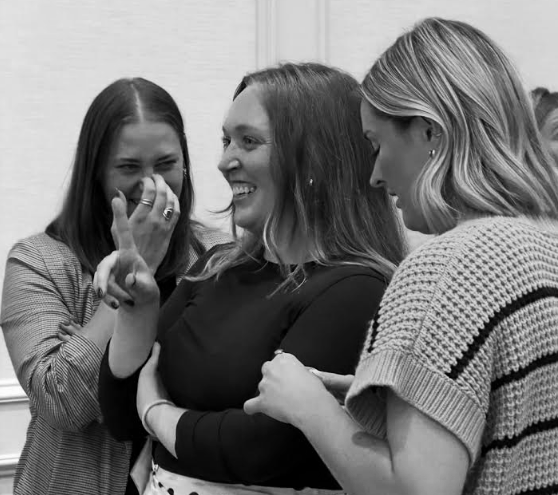
WitWorks Improv at Work Workshop
September 2026
You can't build on what you don't notice.
In my last blog, Beyond Yes, And: Leadership Lessons from Improv at Work, I talked about how Yes, And is one of the most recognizable ideas in improv, but it's not the whole story.
Saying yes to everything doesn't automatically make a great scene. And adding more ideas doesn't necessarily make things better.
In improv, we spend time establishing the reality of a scene. Who are these people? What's their relationship? Where are they? What are they trying to accomplish?
And then something happens.
Maybe it's a line of dialogue. Maybe it's an unexpected reaction. Something that makes you turn your head and think, "Wait a second. That was interesting."
That's what we call the First Unusual Thing.
It's the first spark that breaks the pattern of the reality we've established. It gives the improvisers something specific to recognize, explore, and build upon.
And sometimes, the difference between a scene that goes nowhere and one that really takes off is whether the improvisers recognize that spark.
I think the same thing happens in leadership.
The Employee Who Stood Out
Years ago, I worked as a front desk supervisor at The Blackwell Inn at The Ohio State University.
Working at the university hotel meant we welcomed all kinds of guests. Business travelers, conference attendees, visiting families, and plenty of parents bringing their sons and daughters to campus for orientation.
I always enjoyed working with our student employees, but there was one in particular I loved having on shift.
They consistently exceeded expectations, had a great attitude, and understood something about guest service that went beyond simply following the check-in process.
One of our responsibilities at the front desk was asking qualifying questions. For example, if a family was visiting for orientation, we needed to know so we could apply the appropriate room rate.
A typical interaction might go something like this:
"What brings you into town?"
"Orientation."
"Great! Let me get you checked in."
Nothing wrong with that interaction. The employee asked the question, got the information, and completed the transaction.
But this particular student employee approached things differently.
When a parent mentioned orientation, that wasn't the end of the conversation. It was the beginning.
They asked additional questions, took an interest in the family's visit, and offered insights from their own experience as a student.
Think about that experience from the parent's perspective.
Sending your child off to college is exciting, but it can also be stressful. You're visiting a new place, trying to learn as much as you can, and preparing for a pretty big change.
Now imagine the person checking you into your hotel is an actual Ohio State student who can answer some of those questions and share their own perspective.
That's a different experience than simply getting your room key.
What stood out to me wasn't that this employee had a better script. They understood the purpose behind our qualifying questions and knew how to turn a transaction into a conversation.
And that was something worth recognizing.
Finding the First Unusual Thing in Improv
In improv, before we can recognize something unusual, we need to establish what's normal.
We call this the base reality of the scene.
With TBD The Improvised Musical, we use a tool called CROW to help establish that foundation:
Character: Who are you?
Relationship: How do you know each other?
Objective: What are you trying to accomplish?
Where: Where are you?
When I'm teaching this concept in an improv class or workshop, I'll often have two improvisers start a scene with just four or five lines to establish their base reality.
The other participants in the class watch for something that stands out.
When someone notices an unusual thing, they raise their hand. We pause the scene and ask what they noticed.
Sometimes it's an unexpected statement. Sometimes it's a strange reaction. Sometimes it's a small detail that changes how we understand the characters or their relationship.
The important thing is that it stands out against what we've already established.
It's that first spark. The moment something breaks the pattern and gives the improvisers a new possibility to explore.
Once we identify that First Unusual Thing, we can ask another important improv question:
"If that's true, what else is true?"
That question gives us permission to explore the idea instead of immediately introducing something new.
And that's where Yes, And becomes more intentional.
We're no longer just adding ideas. We're building on something together.
In improv, we call that heightening.
When performers miss the First Unusual Thing, scenes can become a collection of unrelated ideas.
Two people are talking, but neither is quite sure where the scene is going. One person introduces an idea, the other introduces another, and before long they're trying to develop five different premises at once.
There's plenty happening, but not much connecting it all.
Once the performers recognize and commit to the same unusual thing, they have a shared direction.
They can explore it, build on it, and discover where it takes them.
The same principle applies to leadership.
What Are We Missing at Work?
Think about how often leaders look at performance through averages.
Average productivity. Average customer satisfaction. Average performance scores.
Those numbers are useful. They help us understand what's typical.
But sometimes the most interesting information sits outside the average.
Maybe one employee consistently performs better than everyone else.
Maybe another employee has suddenly started struggling.
Those are unusual things.
And rather than immediately deciding what they mean, what if we got curious?
For the high performer, maybe they've developed a different approach. Maybe they're asking better questions, finding efficiencies, or connecting with customers in ways we haven't considered.
For someone who's struggling, maybe they need additional training. Maybe expectations aren't clear. Maybe something in the process is creating unnecessary challenges. Or maybe they simply need someone to listen.
We don't know until we explore.
An unusual thing isn't automatically a problem. And it isn't automatically an opportunity, either.
It's something worth paying attention to.
Noticing something unusual doesn't mean you've found the problem. It means you've found the next question.
When Good Intentions Get in the Way
In her book Multipliers, Liz Wiseman explores how leaders can unintentionally diminish the capabilities of the people around them, even when they have good intentions.
She calls these leaders Accidental Diminishers.
I think about that concept when leaders jump straight into problem-solving mode.
One employee is struggling?
"We need to retrain everyone!"
Someone is outperforming the team?
"Everybody needs to do exactly what they're doing!"
Both responses might come from a good place.
But they can also create new problems.
We might pull an entire team away from their work for training they don't need. Or we might try to turn everyone into a copy of one high-performing employee.
Neither approach leaves much room for individual strengths.
That student employee at The Blackwell wasn't exceptional because they had memorized a better script.
They understood why we asked qualifying questions and adapted their approach to the person standing in front of them.
The opportunity wasn't to make every employee sound exactly like them.
It was to recognize the principle behind what they were doing and consider how other employees might apply it in their own way.
Maybe that means coaching employees on different types of qualifying questions. Maybe it means giving them more opportunities to practice conversations instead of memorizing responses.
But we wouldn't know where to begin if we hadn't noticed what was working.
I've written before about bringing your whole self to work and the role of authentic leadership. One of the lessons I've learned is that great leaders don't need everyone to approach their work the same way. They need to recognize what each person brings to the team and create opportunities for those strengths to grow.
Sometimes the person who doesn't fit the pattern is showing us something the rest of us could learn.
Leadership Coaching Isn't Just About Fixing Problems
There's another reason I think leaders should practice noticing the unusual things happening around them.
We often treat coaching as something that happens when performance needs improvement.
Someone makes a mistake, misses a target, or struggles with a process, and we schedule a coaching conversation.
Or we wait until an annual performance review to discuss what someone did well and what they need to improve.
But what about the things people are doing well right now?
At The Blackwell, we made a point of recognizing great performance in the moment.
We also had Star Forms that allowed us to nominate employees for additional recognition, including Employee of the Month. Several of our student employees received that recognition.
That immediate acknowledgment matters.
Instead of waiting months to tell someone they're doing a great job, we can identify the specific behavior while it's happening.
And we can build on it.
"I noticed how you asked that family additional questions about their visit. You helped make their experience more personal. Keep doing that."
That's coaching, too.
It's recognizing something worth repeating.
And when we understand why a behavior was effective, we can help someone continue developing that strength.
Of course, that also requires an environment where employees feel comfortable trying different approaches, asking questions, and learning from one another.
It's one of the reasons we spend so much time at WitWorks helping teams build psychological safety through improv.
Because coaching works best when people feel supported enough to keep growing.
Coaching isn't just about correcting what people do wrong. It's also about reinforcing what people do right.
Find the Good Unusual Thing: A Leadership Challenge
Here's something I'd encourage leaders to try this week.
Every day, intentionally look for one thing someone on your team does exceptionally well.
It doesn't have to be a huge accomplishment.
Maybe someone asks a thoughtful question during a meeting. Maybe they help a teammate without being asked. Maybe they find a better way to complete a routine task.
Notice it.
Then acknowledge it.
Be specific about what they did and why it mattered.
And take a moment to ask yourself:
"If that's true, what else is true?"
Is there something worth learning from that behavior? Could it help someone else? Is there an opportunity to improve a process, strengthen training, or recognize a strength you hadn't noticed before?
You could even keep an Unusual Things Notebook.
Write down what you notice. Look for patterns. Pay attention to the positive things that might otherwise get lost in the day-to-day work.
The goal isn't to ignore problems or pretend everything is going well.
It's to become better at noticing what's actually happening, especially the good things.
Because if we're only looking for what's wrong, we might miss the people showing us what's possible.
What Does This Moment Need From Me?
In my first blog, I shared a question that I think sits at the heart of both improv and leadership:
"What does this moment need from me right now?"
Sometimes the answer is to speak up. Sometimes it's to make room for someone else.
And sometimes, before we do anything else, the answer is simply to pay attention.
In improv, recognizing the First Unusual Thing is only the beginning.
Once we notice something, we get curious. We explore it. We ask, "If that's true, what else is true?"
And eventually, we have to decide what to do with what we've discovered.
That's where another improv concept comes in:
Today's the Day.
But that's a conversation for another blog.
For now, I'd encourage you to pay attention to what's happening around you.
Because sometimes the most valuable thing a leader can do isn't introduce a new idea.
It's notice the one that's already there.