
Beyond Yes, And: Leadership Lessons from Improv at Work
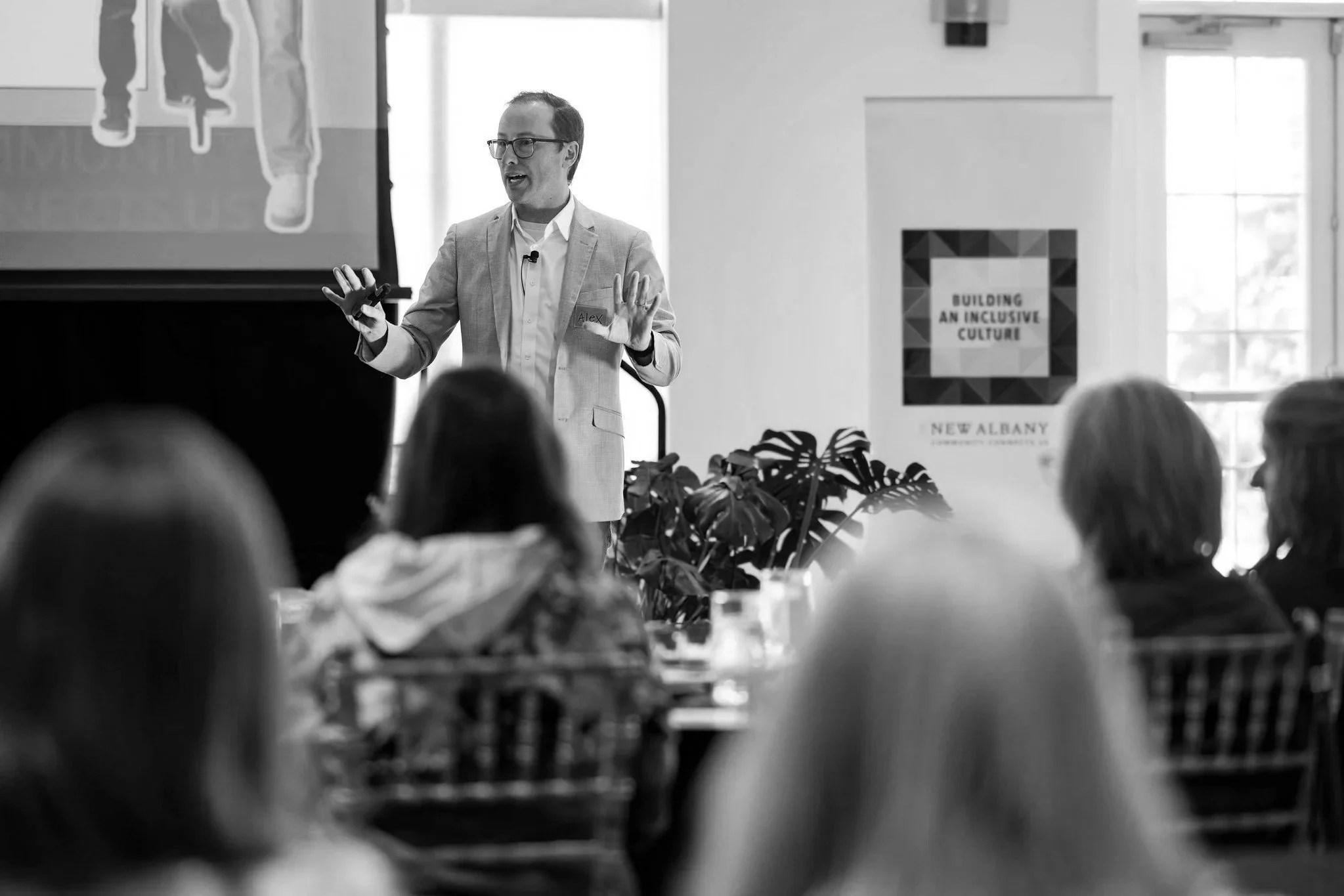
WitWorks Improv at Work Workshop
June 2026
My understanding of improv at work didn't begin in a corporate workshop. It began years ago when I first started learning improv.
When I was new to improv, I preferred short-form games.
If you've ever watched Whose Line Is It Anyway?, you've seen the format. Every game has rules. You know your role. You know when the game starts, and you know when it ends because you've accomplished something.
It made sense to me.
Then I traveled to Chicago and watched my first long-form improv show.
The performers stepped on stage with nothing but a suggestion from the audience. There were no scripts and no guarantee where the scene would go.
At one point, another improviser ran across the front of the stage with one arm raised.
The scene stopped.
A new scene began.
I had never seen this in improv before.
Later that night, I learned it was called an edit or a wipe, depending on where you study improv.
At first, I thought edits existed to rescue scenes that weren't working.
Then I noticed something.
The best improvisers weren't only editing scenes that had stalled.
They were also editing scenes that were getting the biggest laughs of the night.
I don't remember the exact scene.
I don't remember the audience suggestion or even the characters.
What I remember is what happened before the edit.
The performers built the scene carefully. Every choice pointed in the same direction. The audience could feel where the scene was going before anyone on stage finally said it out loud.
Then someone said the thing everyone was already thinking.
The audience laughed.
The performers laughed.
The improvisers watching from the side laughed.
For a brief moment, everyone shared the same realization.
There was connection.
And where there is connection, there is humor.
Then the scene ended.
That was the first time I realized there was more to improv than "Yes, And".
For years, I thought "Yes, And" was the lesson.
Accept the idea.
Build on it.
Keep the scene moving.
I still believe "Yes, And" is one of the most valuable principles in improv.
But it's a tool.
Not the destination.
The question experienced improvisers are really asking is:
“What does this moment need from me right now?”
Sometimes it needs another idea.
Sometimes it needs someone to listen.
Sometimes it needs support.
Sometimes it needs someone to end the scene.
I think leadership works the same way.
Leadership Begins When the Script Ends
Most leadership challenges don't happen because people run out of ideas.
They happen because reality changes.
A customer asks a question nobody expected.
A project changes direction.
A process that worked for years no longer works the same way.
A team member points out a problem that has been overlooked.
When that happens, many leaders try to protect the original plan.
They explain why the process exists.
They hold another meeting.
They defend the way things have always been done.
Improvisers learn to pay attention to what's happening instead.
The goal isn't to protect the script.
The goal is to give the scene what it needs.
I've seen this happen in organizations while redesigning onboarding programs. Teams receive feedback that something isn't working, yet the conversation often shifts toward defending the current process instead of improving it.
That's understandable.
When you've invested years building something, feedback can feel personal.
Improvisers learn a different habit.
The scene isn't personal.
The next moment is.
Why Trust Matters More Than the Perfect Answer
At WitWorks, one of the phrases we use all the time is Trust Your Gut
People sometimes hear that and assume we mean, "Don't think."
That's not what we mean.
Improvisers don't have time to search for the perfect response.
They trust the instincts they've built through practice, listening, feedback, and experience.
Then they pay attention to what happens next.
If the scene changes, they change with it.
That kind of trust doesn't happen by accident.
Before every performance with my improv troupe, we gather in a circle and say four simple words.
"I got your back."
We don't remind each other to be funny.
We remind each other that nobody is standing on stage alone.
That's one way we create psychological safety.
Not by talking about it.
By experiencing it.
I've watched the same thing happen in our workshops.
People usually arrive a little nervous.
Some have already decided they aren't creative enough for improv.
Others are wondering what they've signed up for.
We don't begin by asking people to take a big risk.
We establish expectations.
We agree on the level of play.
We start with something simple.
Then we build from there.
By the end of the workshop, people who were hesitant at the beginning are volunteering ideas, supporting one another, and taking chances they wouldn't have taken an hour earlier.
Not because they stopped feeling nervous.
Because they learned they didn't have to do it alone.
What Improv at Work Has Taught Me About Leadership
When I became an instructional designer, I started asking a different question.
Instead of asking, "What makes someone a better improviser?"
I started asking, "How do people learn to think like one?"
That question changed how I viewed improv.
I stopped seeing it as performance.
I started seeing it as practice.
Practice for listening.
Practice for adapting.
Practice for making decisions when there isn't a script.
Practice for helping someone else succeed.
That's the work we do at WitWorks.
We use improv at workto strengthen leadership communication, build psychological safety , improve team collaboration, and develop stronger leaders through experience instead of lecture.
The games are simply the practice field.
The real work happens back at work.
This article is the beginning of a larger conversation I'm calling Beyond Yes, And.
Over the coming months and years, I'll continue exploring what improvisation has taught me about leadership, learning, and working with others.
Because after nearly twenty years of improv, I've become convinced that "Yes, And" isn't the biggest lesson.
The bigger lesson is learning to ask a better question.
What does this moment need from me?
Whether you're leading a meeting, coaching an employee, facilitating a workshop, or standing on an improv stage, I believe that question changes how we lead.
I'd love to hear from you.
What's one time you had to let go of the original plan because the situation changed?