
Applied Improv for Team Building: What Your Team Actually Gets
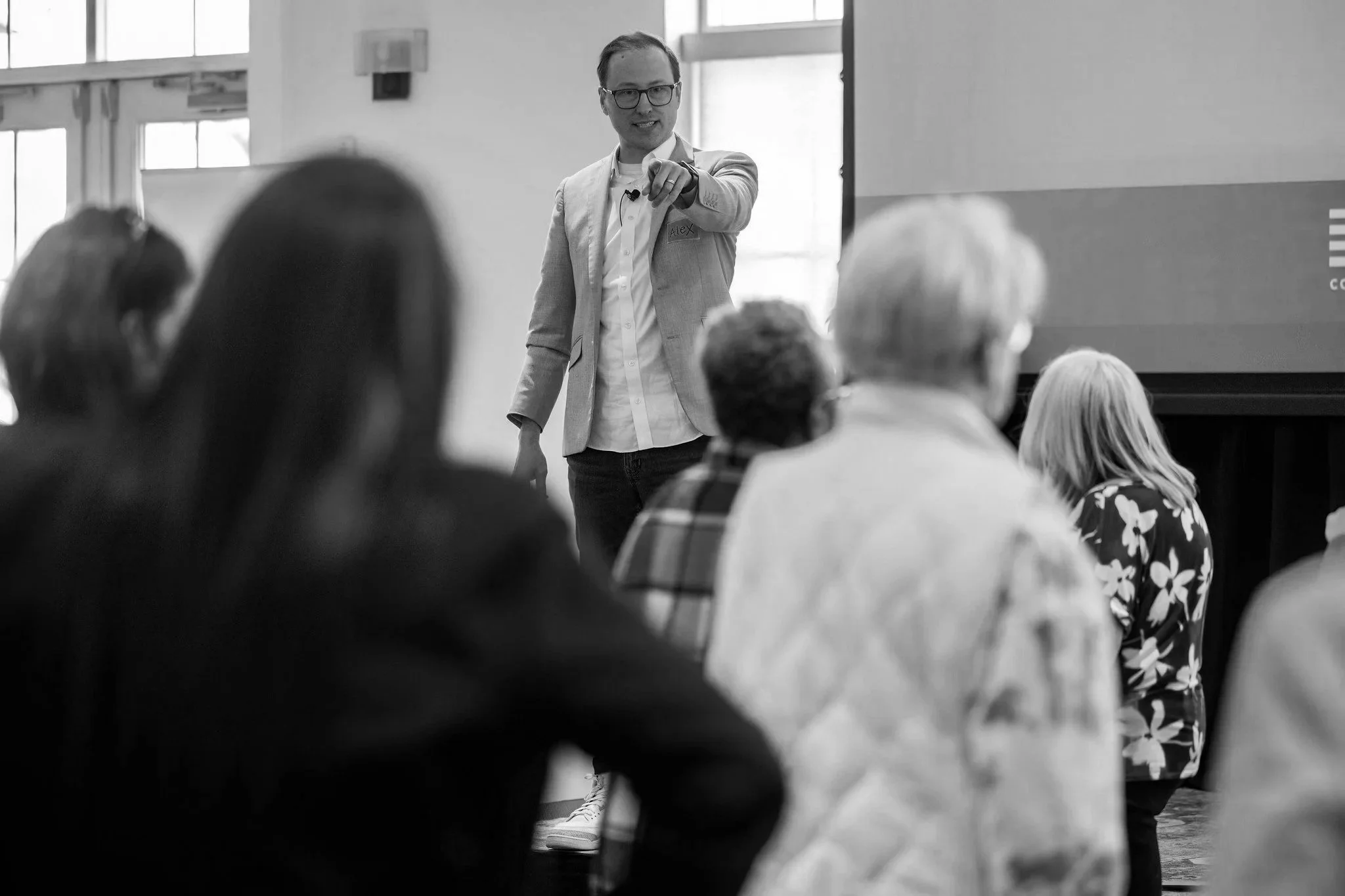
Applied Improv Workshop with City of New Albany
April 2026
Most team building workshops create a fun experience, but the impact fades fast. Applied improv helps teams build real communication, trust, and adaptability that carry into everyday work.
Why Traditional Team Building Doesn’t Always Stick
There has been a growing amount of research on different types of therapy that go beyond traditional talk therapy. Many people are now familiar with music therapy, art therapy, and movement-based therapy. These approaches work because they help people express themselves, lower stress, and feel safe enough to try something new.
They are built around experience, not just conversation.
Laughter is starting to be understood in the same way.
In therapy settings, laughter is often used on purpose because it helps people relax, lowers stress, and makes it easier to open up. Studies show that laughter can reduce stress hormones and increase chemicals in the brain that support mood, connection, and learning. You are starting to see this show up in workplace training programs as well, where teams that share positive moments tend to trust each other more and communicate more openly.
At the same time, many organizations still rely on traditional team building workshops like trust falls, ropes courses, and escape rooms. These activities can create strong shared experiences and help teams interact in new ways.
But they often sit outside the reality people return to at work.
The challenges are different. The environment is different. And because of that, the behavior change does not always carry over into real meetings, real conversations, and real decision-making moments.
What Applied Improv Does Differently for Teams
At WitWorks, we take a different approach to team building and workplace training.
Instead of creating a separate challenge, we bring people into the kind of interactions they already experience every day. We design applied improv workshops for teams that focus on real-time communication, adaptability, and collaboration.
There is no script. There is no perfect answer.
People have to listen closely, stay present, and respond to what is actually happening. This is where applied improvisation becomes a practical tool for improving how teams work together.
Because the experience mirrors real work, the learning transfers more naturally.
Why Laughter Improves Team Communication and Trust
As teams begin to engage in applied improv exercises, something happens that we see in every session.
People start to laugh.
We are not trying to make people funny, but laughter shows up when people are present and reacting honestly to each other.
This is where the research becomes real.
Laughter lowers stress and helps people feel more at ease. It increases openness and makes it easier for people to contribute without overthinking. In both therapy and workplace settings, this shift creates the conditions needed for stronger communication and trust.
In our workshops, that looks like people sharing ideas earlier, listening more closely, and building on what others say instead of shutting ideas down.
This is how psychological safety is built in practice.
Not through a definition, but through repeated interactions where people feel supported.
Why Applied Improv Training Sticks
Most workplace training programs focus on giving people frameworks and information. That can help, but it often stays at the level of understanding.
Applied improv focuses on practice.
People are actively engaging, responding, and adjusting in real time. They are experiencing what effective communication and collaboration feel like, not just hearing about it.
Research shows that people retain more when they are emotionally engaged and involved with others. Laughter strengthens that effect by anchoring the experience in memory.
That means when a similar moment happens at work, people are not trying to recall a framework. They remember how it felt to respond differently.
What Teams Take Back to Work
Over time, these experiences lead to small but meaningful shifts in behavior.
Teams begin to:
Listen all the way through before responding
Build on ideas instead of shutting them down
Speak up earlier instead of waiting for the perfect answer
Feel more comfortable navigating uncertainty
These are the skills that improve team communication, strengthen trust, and support better collaboration in everyday work.
This is the difference between a team building event and real development.
Why WitWorks Uses Applied Improvisation
At WitWorks, we use applied improvisation because it helps teams practice the behaviors they need in real moments.
We are not focused on one-time experiences. We are focused on lasting behavior change.
Laughter is part of that process, not as entertainment, but as a tool that helps people relax, connect, and engage more fully with their team.
Bring Applied Improv to Your Team
If your team has experienced traditional team building workshops or workplace training programs and you are looking for something that creates real change, applied improv offers a different path.
At WitWorks, we design team building workshops that help teams improve communication, build trust, and adapt in real time.
If you are ready to bring a more practical and engaging approach to your team, we would love to connect.